If you have already brought Smile Virtual into your practice, you know what pre-recorded video consults do to case acceptance. The practices using them well are reporting 87 to 92%, a number that holds across smile designs, Invisalign, implants, and everything in between.
Most practices still reach for video in exactly one scenario: a new lead landing in the inbox. That is the smallest sliver of what this platform can do.
Quick Answer
The patients already in your chairs, paying for cleanings, driving in for emergencies, carrying years of unscheduled treatment on their chart, are the easiest ones to close, and they are the ones most practices never record for. Below are six moments in a typical week where video belongs, each one lifting dental case acceptance in a different way.
Key Takeaways
- Video consults are a communication format, not a lead-response tool. The practices seeing 87 to 92% acceptance are using them across the entire patient journey, not just for new leads.
- The highest-use moments are usually the ones already happening in your practice: the hygiene exam that finds crowns, the emergency walk-in, the in-person consult, the unscheduled treatment list, the high-dollar case.
- The operational lift is small: two short team conversations and one protected block of recording time per week.
- The market is shifting underneath the practices still relying on search alone. Being the clinician who shows up differently is what wins in cosmetic dentistry marketing now.
Start With the Patient’s Experience, Not the Patient Experience
Most practices spend their energy on the patient experience: the tour, the warm greeting, the branded coffee cup, the choreography of the new-patient exam. That work matters, and in a quieter market it was often enough to differentiate.
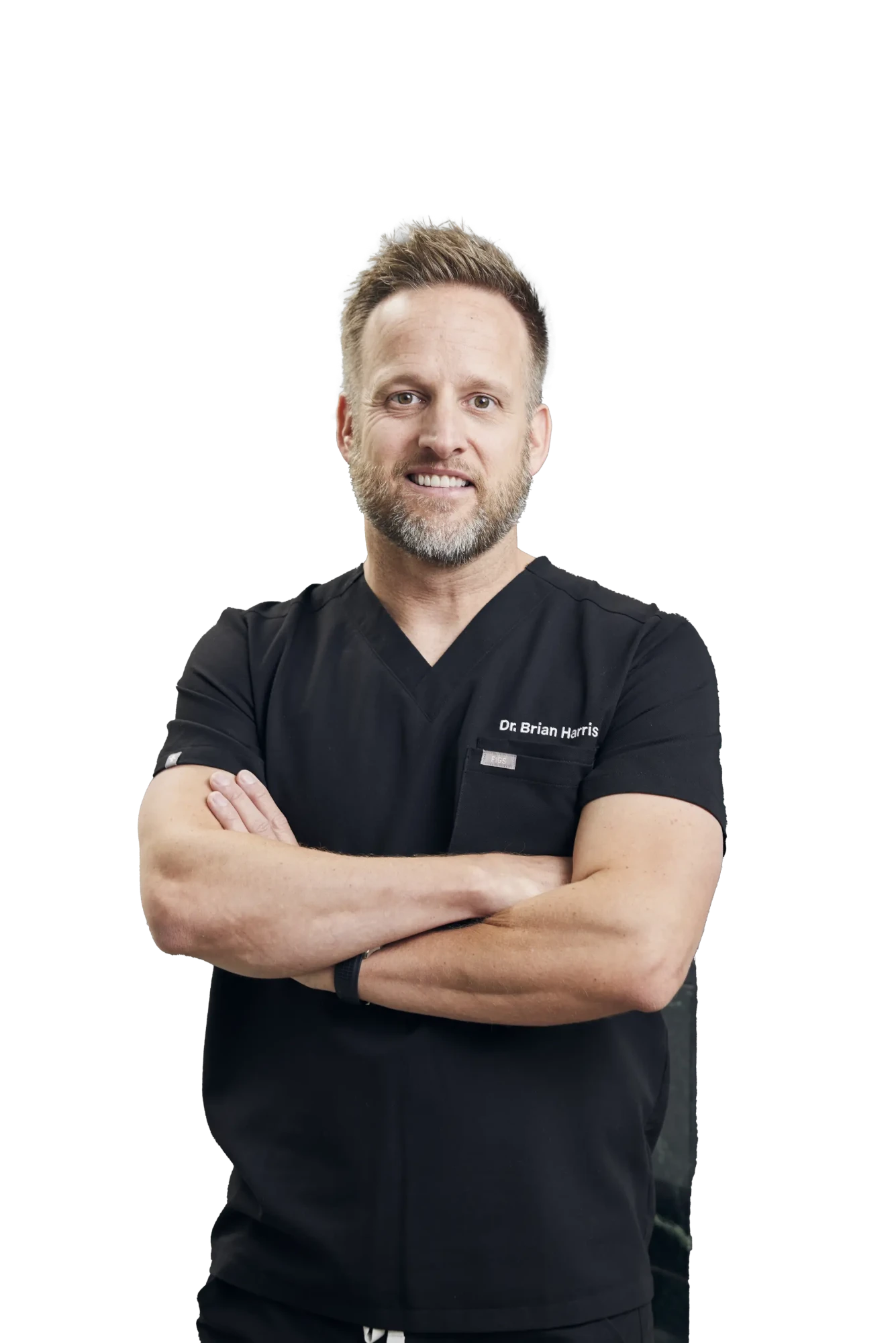
The shift Dr. Brian Harris keeps coming back to is this. Patients today are less impressed by the experience you curate for them, and more impressed by how closely you understand the experience they are actually having. Theirs is simpler than ours. They want to know who they can trust, what their options are, what it will cost, and what it will look like, ideally without having to drive somewhere to find out.
A pre-recorded virtual dental consultation answers all four questions in the order a patient asks them, from their couch, for free. That is why case acceptance moves. Not because the production is slick, but because you are meeting the patient where they already are instead of asking them to come to where you are.
Once that reframe lands, the question of when to record changes shape. Video stops being a lead-response tool and starts being the way you communicate about dentistry across the entire practice.
1. The Price Shopper on the Phone
Every front desk fields the same call. What does a crown cost? What does a smile makeover cost? Do you take my insurance for implants?
Most practices still answer that call with some version of “we will need to see you in person before we can quote.” The caller hangs up and calls the next office. The practice did everything “right” and still lost the conversation.
Re-route that call. Teach the front desk this exact handoff: “We do things a little differently here. If you would love to come in, we would love to see you, and we can give you the most accurate information in person. But our doctors are also happy to record a short video for you. Just upload a photo at this link, tell us what you would like to change, and the doctor will send back their recommendation and a cost breakdown within a few days.”
That single change does three things at once. It captures the lead instead of losing it to the next search. It gives your doctor control of the pricing conversation, with photos on the screen and no caller-ID clock ticking. And it starts a cosmetic dentist consultation on your terms, with the patient already trusting that you do not make them jump through hoops to get an answer.
If your Smile Virtual dashboard is not already filling with front-desk-submitted leads, the fix is one short meeting: give the team the link, give them the two sentences above, and put the submission shortcut on every workstation.
2. The Hygiene Exam That Finds Crowns
You step into the hygiene op, see three teeth that need crowns, and have five minutes to present it. The patient leaves with a printout and a vague plan to “think about it.” Industry benchmarks on same-visit case acceptance are not kind: the 2026 Henry Schein One Catalyst Index pegs industry-wide case acceptance at roughly 45%, with the top decile at 75% and higher. The remainder is treatment that got identified and then never got scheduled.
For anything that is not a single filling (one crown, a couple of crowns, a veneer, a quadrant of restorative), a video is the better presentation. You step out of the op after the exam, record a short walkthrough with the intraoral photos your hygienist uploaded, and send it before the patient has even left the parking lot. They watch it that night at home, with their spouse, without the chair-side pressure. Dental treatment acceptance on that same case moves into the 87 to 92% range for the practices doing this consistently.
The operational piece is simple. Put the Smile Virtual “add patient” link as a shortcut on every hygiene desktop. Train the hygienists to upload intraoral photos and a smile shot the moment they finish the appointment, with one line in the notes like “Saw in hygiene today, needs crowns on 3, 14, 15.” You record it when you have a quiet twenty minutes.
The hygienist saves ten minutes of awkward chairside selling. You save the case.
3. The Emergency Patient
A patient walks in with an abscess on #8 and leaves two hours later out of pain, with a provisional and a lot to figure out. They need the tooth replaced. They have composite buildups on 7 and 10 that are not aging well. In theory, you could do the front four.
The worst time to pitch that case is right then. The best time is that evening, in a recorded video.
Use the chairside time for what it is actually good for: getting them stable, out of pain, and reassured. Then say some version of this: “I want to take some time, put my thoughts together, and send you a short video tonight. There are a couple of good options for how we handle this, and I would rather lay them out properly than rush through them while you are still numb.”
The video does what in-person conversations cannot. It shares every option without the patient feeling pressured to answer any of them, backs the clinical reasoning with the photos you already have on file, and lets them watch it twice if they need to. Many of those cases scope up from a single-tooth repair to a smile makeover consultation, not because you upsold anything, but because the patient finally saw what was possible when the moment to decide was not thirty seconds after an extraction.
4. The In-Person Consult
It is tempting to think that once a patient is in the chair, the follow-up video is unnecessary. The exam is done, the X-rays are up, the hygienist is waiting. Why send a video?
Because a live reveal, no matter how good, is a one-shot conversation. You cannot slow it down, replay it, or share it with the spouse making the actual decision. A follow-up virtual dental consultation does all three.
Use the in-person visit for the clinical read and the relationship. Then end the appointment with: “My team is going to take great care of you today. I would like to gather my thoughts and send a short video with the two or three directions I think make sense for you. That way you can watch it when you have time, share it with whoever you make these decisions with, and then come back to me ready.”
The practices doing this consistently are seeing in-person consult close rates climb into the same 87 to 92% band as their new-lead videos. The reason is not that the exam got better. It is that the final decision now gets made at the kitchen table, with your voice in the room, instead of in a parking lot five minutes after the appointment ended.
5. The Unscheduled Treatment List
Every practice has it. The list of patients who were presented significant treatment eighteen or twenty-four months ago and never came back for it. Veneers that got quoted and shelved. Invisalign cases that stalled after the consult. Smile makeovers that sat in the “maybe next year” column for three next years in a row.
Most of those patients did not say no. They just never got a second chance to say yes.
When the schedule has an open afternoon, hand your team the unscheduled treatment list and have them submit the top candidates into Smile Virtual with the original photos and treatment notes attached. You record short videos with a specific, kind message: “I was looking back at your chart and realized we never got to walk you through the full picture when you were in. The way we treat this now has changed a bit, and I would love for you to see what is possible. No pressure. When you are ready, we are ready.”
These cases cost nothing to generate. They are already in your system, already trust you, and already associate you with the problem they still have. A short video is often the only nudge they needed.
6. The High-Dollar Treatment Plan
All-on-4. Full-arch implants. Full-mouth rehab. Sleep appliances. Complex perio-restorative cases. Veneer cases with ten or twelve units of porcelain. Anything over roughly $10,000, where the patient is weighing a serious investment and is likely to shop at least one other opinion.
These cases are where video is no longer optional. The in-person conversation almost always leaves something unsaid, and the printed treatment plan almost always leaves something unclear. A ten-minute video, with the photos on screen and your voice walking through the options, is the only format that gives a patient everything they need to say yes with confidence.
Use it to lay out the three ways the case can go: the conservative version, the ideal version, and the phased version. Give pros and cons honestly. Share rough fee ranges. End with the same line that works everywhere else: “We can do this a few different ways. Take the time you need, and when you are ready, we will make it happen.”
The patient does not have to pick an option on the video. They just have to finish watching it. That is a far lower bar than closing a $35,000 case live in the consult room, and it is why the practices doing this consistently are quietly becoming the ones that “somehow always get the big cases.”
Why This Is a Right-Now Opportunity, Not an Evergreen One
Two things are happening in the market at the same time, and both of them favor the practices that lean into video now.
The first is the collapse of click-through on search. Nearly 60% of U.S. Google searches now end without a single click to a website, because the AI summary at the top of the results page answered the question. The SEO and AdWords playbook that built most dental practices over the last fifteen years is quietly becoming half as effective. The practices still relying on it alone are seeing new-patient numbers slide and cannot figure out why.
The second is what AI is doing to the patients themselves. There is more cosmetic dentistry content online than ever: more dentists posting great cases, more AI-generated explainer videos, more conflicting advice about shade, shape, and brand. The result, counterintuitively, is that patients are more confused, not less. They are coming back to the one thing AI cannot give them: a real person who looked at their mouth, listened to what they wanted, and explained their options in a way that felt honest.
That is the opening. Being the better clinician is no longer enough to win the search. Being the clinician who shows up differently, who records the video, who sends the plan, who names a price without being asked twice, is what wins. Cosmetic dentistry marketing in 2026 is less about who ranks and more about who connects first.
Smile Virtual is one of the few tools built specifically for that shift. For the broader strategic layer, the Cosmetic Growth Playbook for Dentists walks through the five channels of case flow that practices leading the cosmetic category are running right now.
What This Asks of You Tomorrow Morning
If the rest of this feels like a lot, it is not. Nearly everything above comes down to two short conversations and one protected block of time.
The first conversation is with your front desk. Give them the Smile Virtual intake link, the two sentences at the end of section 1, and permission to submit any cost-shopping caller straight into the platform. The second conversation is with your hygiene team. Give them the shortcut on their desktop, the one line about intraoral photos, and permission to submit any patient who needs more than a filling. Neither conversation takes more than fifteen minutes. Neither needs to be repeated.
The protected time is yours. Pick a half-day (Dr. Harris records Thursday afternoons) and tell your team that is when consult videos get made. If you can get a case out same-day, great. If not, patients know the cadence and are patient with it.
That is the entire operational lift. Everything else, the lift in dental case acceptance, the recovered unscheduled treatment, the big cases that stop walking out undecided, follows from those three decisions.
Key Insights
- Video consults are a communication format, not a lead-response tool. The practices seeing 87 to 92% acceptance are using them across the entire patient journey.
- The highest-use moments are already happening in your practice: hygiene exams, emergencies, in-person consults, unscheduled treatment, high-dollar cases.
- The operational lift is small: two team conversations and one protected block of recording time per week.
- Being the clinician who shows up differently (records the video, sends the plan, names a price without being asked twice) is what wins in cosmetic dentistry marketing in 2026.
See What Smile Virtual Looks Like When Every Patient Journey Uses It
If you are already a Smile Virtual customer and have been using the platform for new leads only, this post is the version of the practice you were paying for. Open your dashboard this week, look at how many consults you have recorded in the last thirty days, and ask whether any of them came from the six moments above. If the answer is “only new leads,” you have the easiest growth lever in your practice sitting one meeting away.
If you want a direct read on what the fully activated version looks like for a practice your size, or if you are evaluating Smile Virtual for the first time, see the full product walkthrough on the dentists page.